
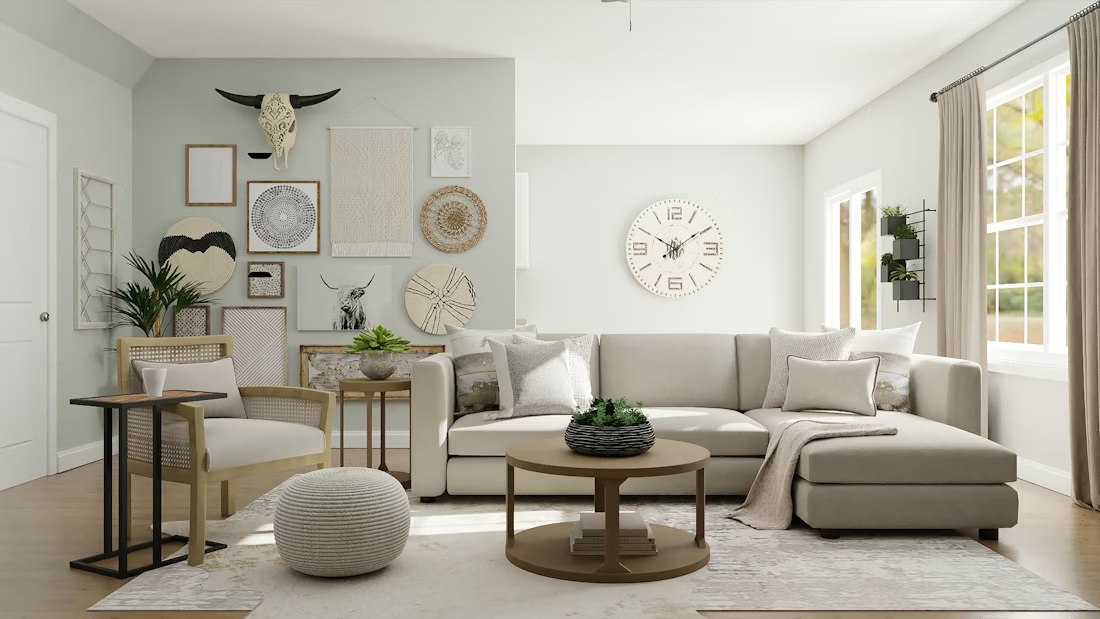
The bedroom is the one room in a home that asks nothing of you. It is not a workspace, not a kitchen, not a corridor. When it fills up with things that are disposable, replaceable, or simply unnecessary, that ease disappears — replaced by a low-level noise you might not notice until it is gone.
Low-waste living and calmer spaces turn out to want the same things: fewer items, better quality, nothing that needs constant replacing. The five swaps below are small in effort but tend to have an outsized effect on how a bedroom feels and how well you sleep in it.
Disposable cotton pads to reusable rounds
A bedside table or dresser covered in single-use cotton pads, wipes, and packaging is one of the quieter sources of visual noise in a bedroom. Each item is small, but together they create a surface that always looks slightly undone, no matter how recently you tidied it.
Reusable cotton rounds — usually made from organic cotton, bamboo, or a mix of both — replace the whole stack with a small set of washable discs that sit neatly in a container. Most sets come with a mesh laundry bag so they can go straight into a regular wash cycle. Over time the saving in both cost and packaging waste is substantial, but the immediate effect is simply a cleaner surface with less to manage.
A small ceramic dish or linen pouch to hold the clean ones keeps them contained and visible enough to reach without searching. The same principle applies to reusable eye masks and cotton ear buds, where reusable silicone versions are now widely available and last for years.
Synthetic bedding to natural fibres
Polyester and microfibre bedding is inexpensive and widely available, but it tends to trap heat, pill quickly, and release microplastics with every wash. A set that feels fine in the shop can feel clammy and uncomfortable within a few months, leading to a cycle of replacement that costs more over time than a longer-lasting alternative would.
Cotton, linen, and bamboo-derived fabrics breathe differently. They regulate temperature better across seasons, which is one of the more overlooked factors in sleep quality — a body that stays too warm struggles to reach and maintain the deeper stages of sleep. Linen in particular softens considerably with washing and age, meaning it tends to get better rather than worse with use.
You do not need to replace everything at once. Starting with pillowcases — the part of bedding that has the most contact with skin — is a practical first step that costs less and still makes a noticeable difference.
When buying, undyed or GOTS-certified organic options avoid the processing chemicals that some people find irritating, particularly for sensitive skin or anyone prone to waking in the night.
Plug-in air fresheners to simple ventilation
Plug-in air fresheners and scented candles with synthetic fragrances are among the more counterproductive things in a bedroom. Many contain volatile organic compounds that affect air quality indoors, and the scent itself can be stimulating rather than calming — particularly for people who are sensitive to fragrance without realising it.
The low-waste swap here is mostly subtraction. Opening a window for ten minutes before sleep ventilates the room, lowers temperature slightly, and reduces the accumulation of carbon dioxide that builds up overnight in a closed room. A cooler room with fresh air is one of the most consistently supported conditions for better sleep across studies — and it costs nothing.
If scent in a bedroom matters to you, a small amount of dried lavender in a linen bag, or a couple of drops of essential oil on a wooden diffuser rather than a plug-in device, gives a lighter, less synthetic result that fades naturally rather than building up. Cedar blocks, which also deter moths, do the same in wardrobes and drawers.
Bright overhead lighting to layered, dimmable light
A single overhead light is usually the most efficient way to illuminate a room and the worst way to wind down in it. Bright, cool-toned light in the hour before bed suppresses melatonin production — the hormone that signals to the body that it is time to sleep — in the same way that phone screens do, just from a different direction.
The swap is not about buying more lamps. It is about changing what you switch on in the evening. A lamp with a warm bulb at low height — bedside, floor level, or in a corner — gives enough light to read or move around by without the alerting effect of overhead brightness. If your current bulbs are cool white, switching to warm white LEDs in the 2700K range is a small change with a noticeable effect on how a room feels after dark.
Where a dimmer switch is not possible, a smart bulb that can be adjusted through a phone or a simple plug-in dimmer adapter on a lamp gives the same result at lower cost. The goal is a room that gets progressively darker and warmer in tone as the evening goes on, rather than switching abruptly from full light to darkness.
Fast, cheap storage to fewer, considered pieces
Flat-pack storage boxes, plastic drawer organisers, and inexpensive furniture that fits right now but not for long contribute to a bedroom that feels provisional — as if the room is always in the process of being sorted out rather than settled. Cheap storage also tends to generate more storage: a box fills up, another is bought, and the total volume of things quietly expands.
The low-waste version of bedroom storage is mostly about reduction before acquisition. Before buying anything to organise a surface or a corner, the more useful question is whether everything in that space is actually needed. A cleared surface requires nothing to organise it.
Where storage is genuinely needed, solid materials — wood, rattan, cotton canvas — last considerably longer than their plastic equivalents and tend to look better as they age rather than worse. A wooden box, a woven basket, or a simple shelf with nothing on it except what belongs there is both lower in waste over its lifetime and calmer to look at every day.
Buying one well-made item that lasts ten years produces less waste than buying three cheaper versions that each last three. The upfront cost is higher; the long-term cost — in money, time, and environmental terms — is usually lower.
A calmer bedroom and a lower-waste one turn out to be pointing in the same direction: less volume, better quality, nothing disposable. The changes above do not require a renovation or a large budget — most start with removing something rather than adding it. What tends to remain, once the replaceable and the temporary are cleared out, is a room that finally feels finished.