
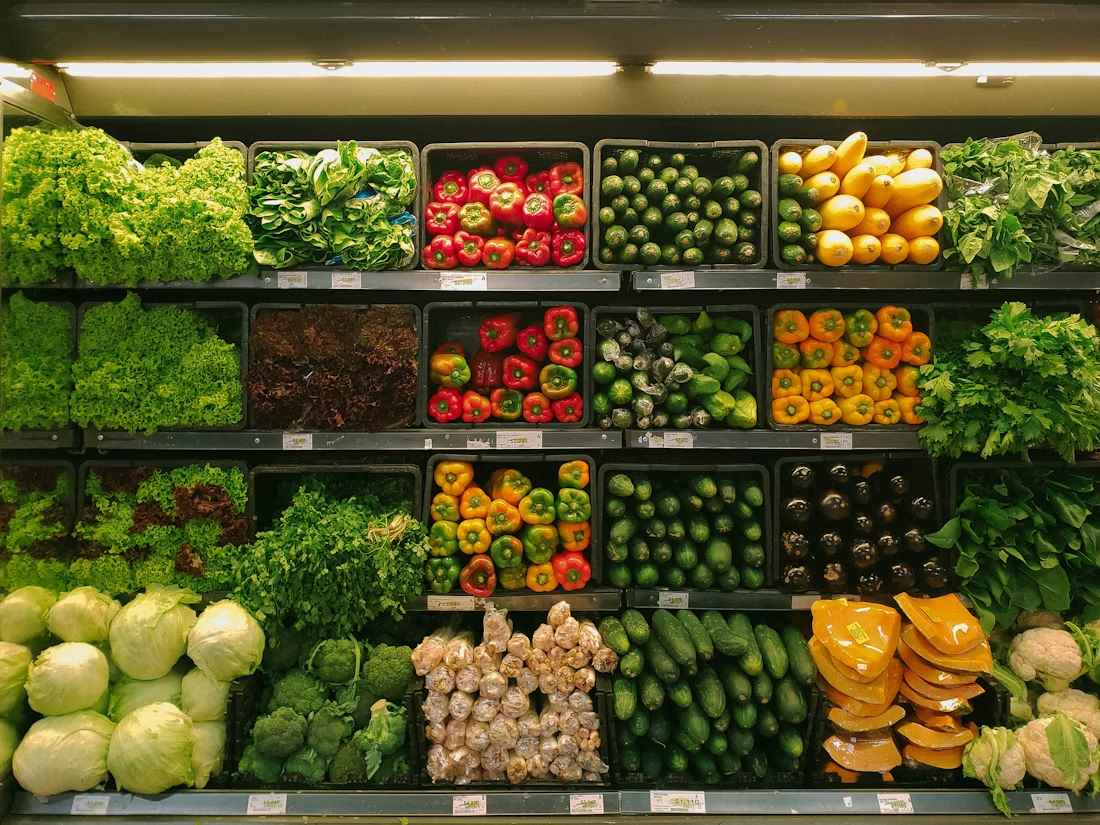
Where you put things matters as much as whether you refrigerate them at all
Most people load a fridge the way they unpack shopping — putting things wherever there is space, keeping tall items at the back, and moving whatever is in the way to make room for what just arrived. It is an efficient way to fill a fridge. It is not an efficient way to preserve food.
Temperature inside a fridge is not uniform. The coldest zone and the warmest zone can differ by as much as five or six degrees Celsius, even in a well-functioning appliance. The door shelves, the top shelf, the lower shelves, the back of the middle shelf, and the crisper drawers all behave differently, and placing produce in the wrong zone accelerates spoilage significantly. Leafy greens in the wrong spot wilt in two days instead of five. Cheese stored too cold dries out and cracks. Herbs placed near the back freeze at the tips and turn black within a day.
The fridge map below is a simple reorganisation based on how temperature actually distributes inside a standard top-freezer or bottom-freezer refrigerator. It takes around twenty minutes to implement and no new equipment to maintain. The only thing it changes is where things go.
How temperature distributes in a standard fridge
Cold air in a refrigerator is generated at the back and circulates downward. This means the lower shelves and the area directly at the back of the middle shelves are consistently the coldest parts of the main compartment. The upper shelves are slightly warmer because cold air has not yet fully settled there. The door shelves are the warmest zone of all — they are exposed to room-temperature air every time the door opens, and they sit furthest from the cooling element.
The crisper drawers operate differently. Most fridges have two drawers with humidity controls — one designed to hold high humidity for leafy vegetables and one with lower humidity for fruit. When both drawers are used as intended, they maintain a localised environment that slows moisture loss in greens and prevents premature ripening in fruit. When they are used interchangeably, or filled with whatever is convenient, neither function works properly.
The thermostat sensor is usually located near the top of the fridge interior. This means the fridge regulates temperature based on what it reads at the top — which tends to be the warmest zone. The lower shelves, where the sensor is not measuring, often run slightly colder than the set temperature. Items that are sensitive to freezing — soft cheese, eggs stored in the fridge, cooked rice — should never be placed directly against the back wall on a lower shelf, where temperatures can occasionally dip below zero in older or more powerful appliances.
Top shelf
Warmest — 4–6°C
Leftovers, cooked food, drinks, ready-to-eat foods, soft drinks, yogurt
Stable temperature, easy to see — good for food eaten soon
Middle shelf
Consistent — 3–4°C
Dairy, eggs, hard cheese, deli meats, opened jars, tofu
Reliable cold without freezing risk — ideal for perishables used daily
Lower shelf
Coldest — 1–3°C
Raw meat, raw fish, marinating proteins — always on a plate or in a sealed container
Cold enough to slow bacterial growth, and below other food if leaks occur
High-humidity drawer
Moist — 0–2°C
Leafy greens, herbs (in a damp cloth), broccoli, asparagus, leeks, spring onions
High moisture prevents wilting in vegetables that respire quickly
Low-humidity drawer
Drier — 0–4°C
Fruit — apples, grapes, berries, citrus, stone fruit once ripe
Less moisture slows mould on fruit skins and prevents ethylene buildup
Door shelves
Warmest — 6–10°C
Condiments, sauces, juice, butter, water filter jug, jams
High-acid and high-sugar items are stable at warmer temperatures
What most people get wrong — and why it matters
Eggs on the door shelf is perhaps the most widespread storage error in domestic fridges. Eggs are porous and absorb odours easily, and the temperature fluctuation on the door — cooling and warming repeatedly as the door opens — accelerates this. In countries where eggs are sold refrigerated, they should be kept in the middle shelf of the fridge in their original carton, which also protects them from absorbing fridge smells. The door shelf is too warm and too variable for a food that deteriorates noticeably with temperature changes.
Raw meat on a middle or upper shelf is a food safety issue as much as a storage one. Any leakage — however small — drips downward and can contaminate everything below it. Raw protein of any kind belongs on the lowest shelf of the main compartment, stored in a sealed container or on a plate with sides deep enough to catch any liquid. This is not a matter of preference; it is the arrangement that prevents cross-contamination in a way no other placement does.
Fruit and vegetables stored together in the same drawer is a slower but equally costly mistake. Many fruits — apples, pears, peaches, avocados, and bananas in particular — produce ethylene gas as they ripen. Ethylene accelerates ripening in surrounding produce, which means vegetables stored in the same drawer as ethylene-producing fruit will age and spoil faster than they would in a separate environment. Keeping fruit and vegetables in separate drawers, even without adjusting the humidity settings, makes a meaningful difference to how long both last.
Some produce should not be refrigerated at all. Tomatoes lose their flavour and develop a mealy texture below 12°C — they belong on the counter. Potatoes, onions, and garlic all store better in a cool, dark cupboard than in a fridge. Whole bananas go black in the cold. Knowing what to leave out is as important as knowing where to put what goes in.
Bread in the fridge is another common error made with good intentions. Refrigeration does slow mould growth in bread, but it dramatically accelerates staling — the process by which starch molecules crystallise and the texture becomes dry and crumbly. Bread kept in the fridge goes stale three to four times faster than bread kept at room temperature in a bread bin or wrapped in a clean cloth. For long-term storage, freezing is far better than refrigerating.
Simple habits that maintain the system
Reorganising the fridge is straightforward. Maintaining the organisation through a week of shopping, cooking, and leftovers is slightly harder — not because the system is complicated, but because the habit of putting things wherever there is space is deeply ingrained. A few small practices make the difference between a fridge that stays organised and one that reverts within days.
Weekly habits that hold the system
A fridge thermometer costs very little and gives information that the built-in dial or digital display does not. The dial sets a relative level — warmer or colder — but does not tell you the actual temperature in different zones. A thermometer placed first on the lower shelf, then on the upper shelf, and then on the door shelf for a few hours each gives a clear picture of how your specific fridge distributes temperature and where the boundaries of each zone actually fall. This is particularly useful in older fridges, where the cooling element may not perform as evenly as it once did.
The goal is not a perfectly tidy fridge that looks like a photograph. It is a fridge where the right things are in the right conditions — cold enough where cold matters, humid enough where humidity matters, and visible enough that nothing is forgotten until it is too late to use. That combination, maintained consistently, cuts food waste more reliably than any app, label system, or meal plan.
Food waste rarely happens all at once. It accumulates quietly — a bag of salad that went too quickly, a block of cheese that dried out before it was finished, leftovers that got pushed to the back and found a week later. The fridge map does not solve all of this. But placing things where the temperature suits them, and keeping the right produce in the right humidity, removes the most common causes before they have a chance to cost anything.